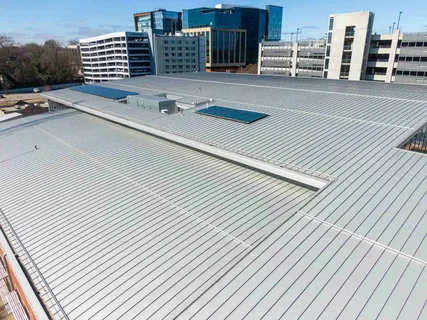

Modified bitumen has become a workhorse of modern commercial roofing, offering a blend of proven asphalt durability and polymer science that lets owners sleep easier when storms roll in. Before you decide whether this multilayer membrane fits your building and budget, it helps to understand how it is manufactured, what benefits it delivers, and the practical considerations that separate successful installations from premature failures.
The guide below breaks the topic into clear, action-oriented sections so facility managers, architects, and contractors can make decisions with confidence.
What Makes Modified Bitumen Different?
At its core, modified bitumen starts with traditional roofing asphalt that is enhanced with styrene-butadiene-styrene (SBS) or atactic polypropylene (APP) polymers. These additives act like microscopic shock absorbers, giving the membrane rubber-like flexibility in freezing weather and impressive heat resistance during sweltering summer afternoons.
Manufacturers embed the polymer-asphalt blend into reinforced mats of fiberglass or polyester and then cap it with either mineral granules or a smooth surface ready for a reflective coating. The result is a sheet that can be installed in multiple plies, forming a tough, redundant skin that stays stable under foot traffic, hail impact, and thermal cycling.
Key Advantages for Facility Owners
Property managers like modified bitumen because it balances long-term value with real-world durability. The multi-ply approach delivers redundancy—if an upper layer suffers punctures, lower plies remain watertight, reducing leak risk and repair costs. Polymer modification means excellent dimensional stability, so the roof expands and contracts with temperature swings instead of tearing at seams.
Because factory sheets are delivered fully cured, installation windows are generous, allowing crews to work in cooler or slightly damp conditions that would stall a fully adhered single-ply. Fire-resistance ratings are strong, and the material accepts a variety of reflective coatings, lowering rooftop temperatures and utility bills.
Installation Best Practices
Even the best membrane can fail if detailing is sloppy. Start by verifying the deck for moisture intrusion, structural soundness, and correct slope; trapped water or loose fasteners telegraph problems later. Primer improves adhesion on concrete or aged BUR surfaces. During torch application, experienced technicians keep flame tips blue and moving to avoid scorching while ensuring full fusion between layers.
Cold-adhesive or self-adhered sheets eliminate open flames altogether, a plus for hospitals or food plants. Perimeter edges and penetrations deserve extra attention: use pre-manufactured flashings when possible, and terminate with corrosion-resistant edge metal secured per ANSI/SPRI ES-1. A final infrared scan verifies continuous bonding before warranty issuance.
Lifecycle Costs and Sustainability
Upfront, modified bitumen typically lands in the middle of the commercial roofing price spectrum, but its total cost of ownership often beats cheaper membranes once repair frequency, downtime, and energy savings are factored in. A white acrylic or silicone topcoat can drop rooftop temperatures by up to 50 °F, easing HVAC loads and extending membrane life by as much as a decade.
In addition, several manufacturers now offer SBS formulations with recycled content, and entire systems can participate in take-back programs at tear-off, diverting tons of material from landfills. If you partner with a local commercial roofing service committed to preventive maintenance, expect annual inspections, prompt patching of minor punctures, and detailed moisture reports that keep surprises off the balance sheet.
Conclusion
Modified bitumen’s blend of robustness, adaptability, and evolving sustainability credentials makes it a smart contender for many commercial roofs. By understanding how polymers enhance asphalt, insisting on meticulous installation, and planning a proactive maintenance strategy, facility managers can secure decades of leak-free performance and lower energy bills.
When analyzed across its full lifecycle, this familiar-yet-refined technology proves that sometimes the practical choice is also the most strategic—especially when keeping tenants dry and budgets intact are non-negotiable priorities.