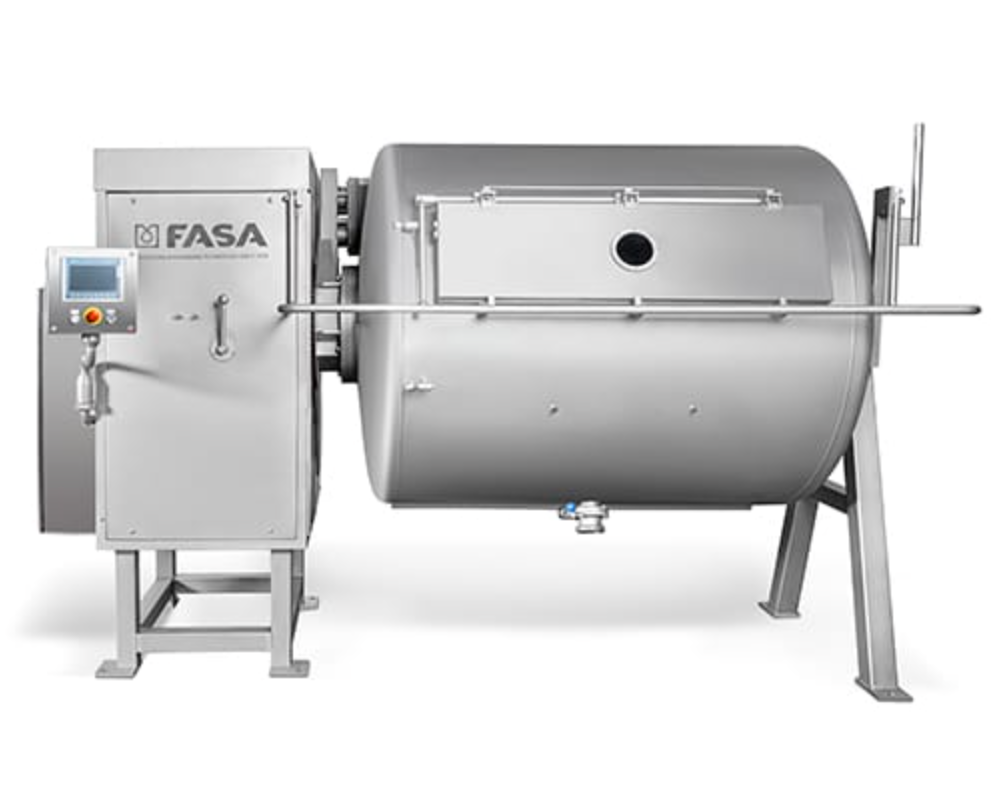

You can turn cream into butter quickly and consistently with a butter churn machine from FASA. A FASA butter churn is a stainless-steel, batch-style machine that agitates ripened cream to separate fat and form butter, handling from small to several-hundred-kilogram batches depending on the model.
Expect a clear look at how the machine works, what makes FASA’s designs reliable for food production, and how their systems tie into automatic packaging and service support. If you want to know whether a churn fits your kitchen, plant, or product goals, this article will show what matters for performance, cleaning, and spare parts.
Understanding Butter Churn Machines
You will learn how a churn turns cream into butter, what parts matter most, and how older machines differ from modern designs. Focused details help you pick or operate a machine for small-scale or industrial use.
Principles of Operation
A butter churn separates fat solids from liquid by agitating cream until butter solids form. You feed ripened cream (typically 35–42% fat) into the drum, then apply mechanical motion to break fat globule membranes and force them to clump.
Churning uses one of two motions: tumbling or shaft-driven paddles. Tumbling rotates the drum so cream folds and collides. Paddle systems keep the vessel mostly still while paddles shear and compress the cream.
You control speed, time, and temperature. Lower temperatures firm butter and shorten working time; higher temperatures speed processing but can reduce yield. You then drain the buttermilk and wash and knead the curd to remove remaining liquid.
Key Components and Features
The main chamber is a stainless steel drum sized from small batches to 3,000 L for FASA models. Look for a large rectangular opening with a secure cover for loading and cleaning, plus a sight glass to monitor progress.
Drive systems include a gear motor and a clutch. Reliable gearboxes allow steady rotation and safe overload protection. Valves and drains let you separate buttermilk and clean efficiently.
Other useful features: manual or automated cleaning options, bacteriologically safe seals, and settings for churning vs dry kneading. If you plan to integrate the churn into a line that includes butter filling and wrapping machines, confirm pump and transfer points match capacities and hygiene standards.
Traditional vs. Modern Churners
Traditional churns rely on simple tumbling or hand-cranked paddles and suit artisanal or low-volume work. They give you direct control and simple maintenance but need more manual labor and offer lower throughput.
Modern churners, like those from FASA AB, use stainless construction, sealed covers, gear-motor drives, and options for batch sizes up to 1,200 L of cream or 600 kg of butter per cycle. They reduce labor, improve hygiene, and speed production.
Modern units also simplify downstream integration with butter filling and wrapping machines. They include features for safe sealing, easy cleaning, and adjustable churning positions for wet churning or dry kneading.
FASA AB’s Innovations in Butter Processing
FASA AB develops machines that solve real production needs: they make both batch and continuous butter systems, plus packing lines. You’ll find stainless-steel churns, cooling and kneading stations, and compatible packaging equipment at their Marijampolė site.
Overview of FASA and Marijampole Location
You can contact FASA AB at their Marijampolė, LT-68112 facility for sales and service. The company combines processing and packaging know-how so you get machines that fit into complete production lines.
The Marijampolė location houses engineering, assembly, and testing areas. That means you can visit for demonstrations or inspect machines before purchase. Support and spare parts are coordinated from this site, which helps shorten lead times.
FASA’s product focus includes dairy processing and packaging equipment. You’ll deal with a supplier that knows packaging compatibility for butter blocks, tubs, and wrapped portions.
Butter Churn and Processing Equipment Range
FASA offers drum butter churns sized for small to large batches. Typical churn volumes reach up to 3,000 liters and can process cream with 35–42% fat, so you can choose capacity based on your plant output.
Key features include stainless-steel drums, sight glasses, drain valves, and gear-motor drives. You’ll see manual-clean and jacketed designs with options for dry kneading and controlled moisture dosing.
The equipment list extends to kneading stations, cooling systems, and linking conveyors. FASA’s machines are designed to integrate with their packaging equipment, letting you move from butter making to wrapping or tub filling smoothly.
Continuous and Batch Butter Production
You can choose batch production for traditional, small-to-medium runs or continuous systems for high throughput. Batch churns let you control ripening and churning per lot, which suits artisan butter or variable recipes.
Continuous lines combine pre-cracker, churn, kneader, and cooling stages for steady output and uniform moisture distribution. These systems include counter-rotating augers, perforated plates, and separate cooling circuits to ensure consistent texture.
Options for automation vary: you can select manual controls or add automatic moisture control and dosing. If you need packaging, FASA’s butter production lines are compatible with their ARM and EMF series packing machines for a joined processing-packaging workflow.
Automated Packaging and Wrapping Solutions
You get fast, accurate block forming, airtight seals, and the option to add end-of-line carton packing. Machines focus on dosing accuracy, flexible pack shapes, and simple integration into existing lines.
Butter Filling and Wrapping Machine Features
The machines dose butter into molds and wrap each block in foil, parchment, or ecoline. You can expect precise dosing systems that cut waste and keep weights consistent across packs.
Speed ranges suit small to medium production. Look for adjustable brick sizes, bottom folds for stability, and options for rectangular, stick, or semi-round portions. Built-in sealing units create airtight wraps to extend shelf life.
Maintenance access is usually straightforward. Spare parts sets often cover common wear items like seals and bearings. Warranty and after-sale service help you keep uptime high.
Flexible Packaging Machine Options
You can choose models that handle multiple pack weights on one machine. Quick height adjustment lets you switch from 200–400 g bricks to lighter or heavier sizes without long changeovers.
Feed options vary: hopper with auger for batch processing, or direct feed from your processing line for continuous flow. Material choices include aluminum foil, parchment, and memory-film ecoline to match your branding and barrier needs.
Some models add a semi-automatic case packer to box wrapped blocks. That end-of-line option reduces manual handling and speeds up carton loading.
Integration of Photocell Centering Devices
Photocell centering devices align printed wrapping material so each cut lands in the right place. You get even graphics placement and fewer misprints, which keeps packaging consistent on shelf.
These sensors work with servo controls to adjust film position in real time. That reduces waste and avoids rework from off-center cuts. Photocells also make it easier to run patterned or pre-printed film.
When you install the device, confirm compatibility with your film type and printing repeat length. Proper setup prevents registration errors and improves overall line efficiency.
Installation, Service, and Spare Parts Support
You will get on-site installation, routine maintenance options, and access to replacement parts for long-term operation. The support focuses on fast spare part delivery, trained technicians, and service terms that match your plant size and local regulations.
After-Sales Service Commitment
You receive on-site installation by trained FASA AB technicians who follow your site rules and country-specific safety standards. Technicians handle mechanical set-up, electrical connections, and initial test batches so the churn runs to specification before you start production.
FASA AB offers warranty coverage and a service hotline for fault diagnosis. If a problem occurs, they provide remote troubleshooting and schedule a site visit when needed. You can request operator training during commissioning to reduce operator errors and downtime.
Service contracts are available for periodic visits. These cover inspection of the drive gear-motor, clutch, seals, and safety devices. Contracts can include emergency response windows and calibration records to keep your HACCP and quality systems compliant.
Comprehensive Spare Parts Set
FASA AB supplies a dedicated spare parts set tailored to your churn model. Typical kits include drive gear-motor components, special mechanical clutch parts, seals (including bacteriological cover seal), sight glass replacements, drain valves, and fasteners.
You can order OEM parts directly from FASA AB or local agents to ensure fit and material compatibility (stainless steel components where required). Parts are tracked by model and serial number so you get the correct items quickly.
Keep critical spares on-site — clutch parts, seals, and the most-used valves — to avoid production stops. FASA’s parts service also offers installation support if you need help replacing complex items.
Ongoing Upgrades and Maintenance
FASA AB provides planned maintenance schedules based on your churn’s capacity and run hours. Scheduled tasks include gearbox lubrication checks, seal inspections, drum surface checks, and safety device tests to maintain performance and hygiene.
You can request retrofit upgrades like improved safety guards, automation for churning cycles, or updated control panels to match new regulations. FASA documents upgrade work and issues parts certificates when metallic or hygienic surfaces are affected.
Maintenance records and spare parts usage reports are available on request. These help you forecast parts needs, budget for replacements, and prove adherence to local food safety audits.